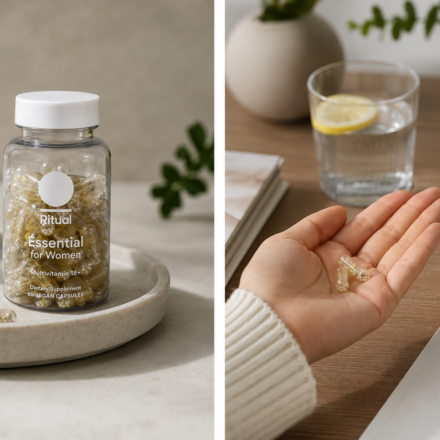
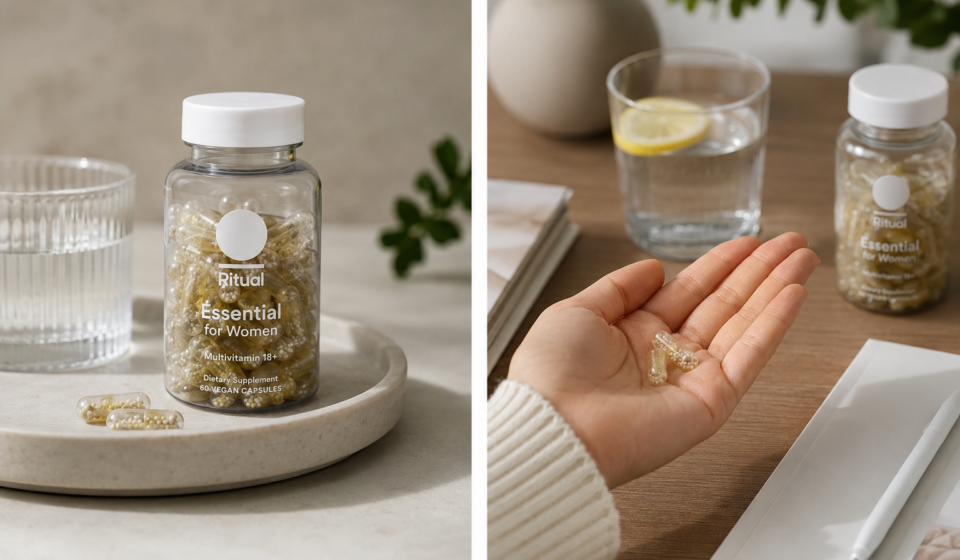

Ritual has built a reputation as one of the most talked-about names in the multivitamin space, known for its see-through capsules, minimalist ingredient lists, and heavy emphasis on transparency. But a good Instagram feed doesn’t automatically mean a good supplement. This Ritual vitamins review looks past the branding to cover what’s actually in the capsules, how the company approaches formulation, what it costs, and where it may fall short — so you can decide if it fits your own health routine.
Table Of Content
What Is Ritual?
Ritual is a Los Angeles-based supplement company that launched in 2016 with a subscription model and a promise of full ingredient traceability. Instead of packing dozens of vitamins and minerals into one capsule, Ritual takes a more selective approach, choosing a small number of nutrients it considers commonly under-consumed in a typical Western diet.
The company offers different formulas for different life stages and needs, including options for women, men, teens, and prenatal or postnatal support. Its flagship product, Essential for Women 18+, is generally the most discussed and reviewed of the lineup.
What’s Actually Inside a Ritual Multivitamin
Rather than a long ingredient list, Ritual’s core formulas typically focus on around nine key nutrients, such as:
- Omega-3 (from vegan algal oil)
- Magnesium
- Iron
- Folate (in a methylated, bioavailable form)
- Boron
- Vitamin B12
- Vitamin D3
- Vitamin K2
- Vitamin E
The company markets this minimalist approach as intentional — the idea being that a multivitamin should fill common dietary gaps rather than attempt to replace a balanced diet with mega-doses of everything. Ritual also publishes sourcing information for each ingredient, including where it comes from and why a particular form was chosen, which is a level of transparency not common across the supplement industry.
The capsules use a delayed-release design, meant to dissolve later in the digestive process rather than immediately in the stomach, and many reviewers note a mild minty taste and smell, which is unusual for a vitamin capsule.
Is Ritual Worth the Price?
Ritual sits toward the premium end of the multivitamin market. It’s priced noticeably higher than typical drugstore multivitamins, and purchasing generally requires a recurring subscription through the company’s website, though the products are also sold through some third-party retailers.
Whether that price is worth it largely comes down to what you value:
- If ingredient transparency and sourcing matter to you, Ritual offers more visibility into its supply chain than most competitors.
- If you’re comparing purely on cost per nutrient, a broader-spectrum multivitamin from a standard drugstore brand will likely be cheaper.
- If you want a “one and done” multivitamin covering the full range of daily vitamins and minerals, Ritual’s minimalist formula may not be the best fit, since it intentionally leaves several nutrients out.
Where Ritual Falls Short
No supplement review is complete without covering the limitations, and Ritual has a few worth knowing before you subscribe:
- It’s not a complete multivitamin. Ritual’s core formulas commonly omit nutrients like zinc, selenium, calcium, vitamin C, vitamin A, and a full B-complex — nutrients that other multivitamins typically include.
- Doses aren’t always at 100% of the Daily Value. Some of the included nutrients are dosed below standard reference values, which is intentional on Ritual’s part but worth knowing if you’re relying on it to cover your full daily needs.
- Subscription-only pricing can be inconvenient if you’d prefer a one-time purchase or want to buy in bulk.
- It may not suit everyone’s needs, particularly people with higher nutrient requirements due to exercise intensity, medical conditions, or dietary restrictions that go beyond what the formula addresses.
Certifications and Quality Testing
Some of Ritual’s products carry third-party quality certifications, such as USP Verification (which confirms that what’s on the label matches what’s in the capsule) and Informed-Sport certification on select products (which screens for banned substances, relevant to competitive athletes). Ritual also states that its products undergo third-party testing for heavy metals, microbes, and major allergens. These kinds of certifications matter because dietary supplements in the U.S. are regulated as a category of food rather than as pharmaceuticals, meaning oversight is generally less strict than it is for prescription or over-the-counter medications.
Who Might Benefit From Ritual
Based on its formulation and positioning, Ritual tends to appeal most to:
- People who already eat a reasonably balanced diet and want a supplement to fill small, specific gaps rather than replace poor nutrition
- Vegans or vegetarians looking for a plant-based omega-3 and B12 source
- People who prioritize ingredient sourcing transparency over cost
- Those who prefer a smaller, simpler capsule count over an all-in-one mega-dose formula
It’s likely a less efficient fit for people looking for the most complete nutrient coverage per dollar, or anyone with specific deficiencies that require targeted, higher-dose supplementation.
A Note on Supplements and Safety
Multivitamins, including Ritual, are not a substitute for a balanced diet or medical treatment. Nutrient needs vary significantly based on age, sex, health conditions, medications, and lifestyle, so it’s worth talking to a doctor, registered dietitian, or pharmacist before starting any new supplement — especially if you’re pregnant, managing a health condition, or taking other medications that could interact with added vitamins or minerals. For general guidance on dietary supplements, the National Institutes of Health Office of Dietary Supplements is a reliable, independent resource.
For more wellness brand breakdowns, see our related reviews on MyHealthyPlanet and iHerb, or browse our full Health & Fitness section.
Frequently Asked Questions
Is Ritual a complete multivitamin?
No. Ritual’s core formulas are intentionally minimal and typically leave out several common nutrients like zinc, calcium, and vitamin C, so it’s better viewed as a targeted supplement rather than a full daily coverage multivitamin.
Do I need a subscription to buy Ritual?
Purchasing directly from Ritual’s website generally requires a recurring subscription, though the products are also available through some third-party retailers without a subscription commitment.
Is Ritual safe to take daily? For most healthy adults, daily multivitamin use is generally considered low-risk, but individual needs vary. Check with a healthcare provider, especially if you take other medications or have an existing health condition.
Are Ritual vitamins vegan?
Many of Ritual’s formulas, including the omega-3 source, are plant-based, but ingredient details can vary by product and formula, so it’s worth checking the specific product page before purchasing.
How does Ritual compare to a standard drugstore multivitamin?
Ritual generally costs more but offers greater ingredient transparency and more selective, bioavailable nutrient forms. A drugstore multivitamin will typically cover a broader range of nutrients at a lower price, but with less sourcing detail.
Can Ritual replace a healthy diet?
No supplement, including Ritual, is designed to replace a balanced diet. It’s meant to complement your existing nutrition, not substitute for it.
Is Ritual third-party tested?
Some Ritual products carry third-party certifications such as USP Verification, and the company states its products are tested for contaminants like heavy metals and microbes, though testing scope can vary by product.
Final Thoughts
Ritual has carved out a clear niche in the crowded supplement market: a smaller, more transparent, higher-quality-sourced multivitamin rather than an everything-in-one-capsule approach. Whether it’s worth the price depends on what you’re looking for — if ingredient sourcing and simplicity matter more to you than covering every possible nutrient, it’s a reasonable option. If you want the broadest coverage for the lowest cost, it’s worth comparing against more comprehensive multivitamin options first. As with any supplement, checking in with a healthcare provider before adding it to your routine is the safest first step.